First-Year Med Student Must-Haves (and What to Skip) + a Free Checklist
Heads up: links to Med Mapped go to my own Etsy shop. I make a little if you buy, and the free printable here stays free either way.
If you've searched "med student must haves," you've probably seen the lists: forty products, three of them stethoscopes, a label maker, and a very aesthetic desk. It's a lot! And it can make you feel like you're already behind before orientation even starts.
Here's the good news. Most of what actually helps in first year is pretty boring, a good chunk of it your school hands you, and the rest you can figure out as you go. I'm a first-year too, so instead of a shopping haul, here's how I'd think about it, built from the tips that keep coming up in the most upvoted threads from med students on Reddit and student forums. There's a free two-page checklist at the end to make it easy.
Rule one: wait for your school's list (and ask a second-year)
This is the tip people repeat most, and it's the one that saves the most money. Schools are really different. Some hand every student a stethoscope or a diagnostic kit. Some require a certain laptop or give out tablets. Some have strict anatomy lab rules about scrubs and shoes. If you buy before you know, you might end up with two of something.
Same goes for books. A very common piece of advice is not to buy everything on the recommended list. Lots of students lean on their lecture slides plus a few outside resources, and your library probably has many of the big textbooks as e-books for free. Check before you pay!
Then find a second-year and ask, "What did you actually use?" They just did your exact curriculum, and most of them are happy to help. It's honestly the best shopping advice you'll get.
The study setup (this is where your money matters)
You'll spend a lot of hours at a desk this year, so this is the part worth getting right.
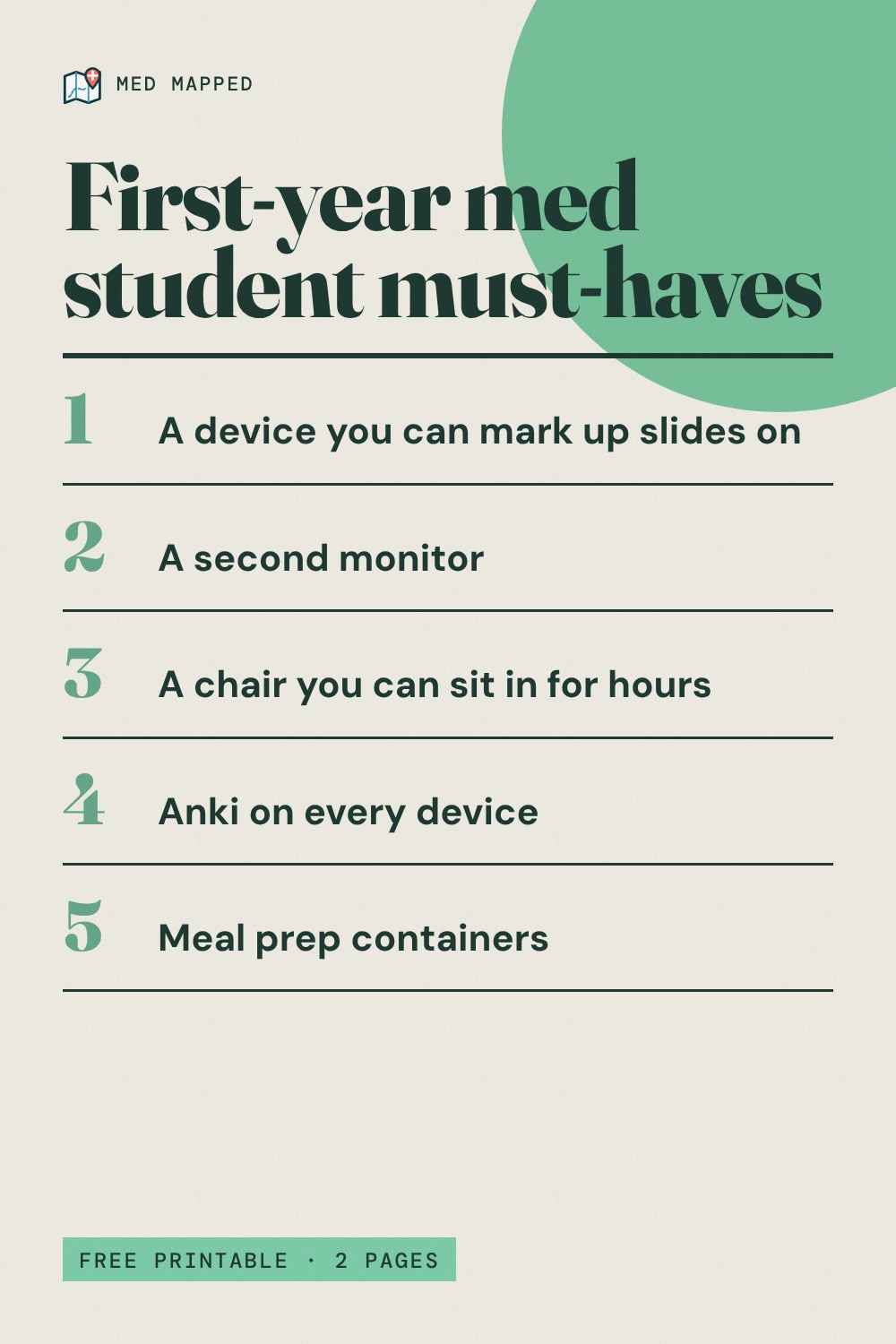
- One device you can mark up slides on. A tablet with a stylus is the most common favorite in student threads, because it keeps every lecture and every note in one place. But plenty of people do great with just a laptop. If you already have something that works, you're set! Don't buy two new devices.
- A second monitor. This one shows up again and again as the cheap upgrade people wish they'd made sooner. Lecture on one screen, notes or flashcards on the other. It makes a long study day feel a lot less cramped.
- A chair and a desk you can actually sit at. Not glamorous, but your back will thank you by week three.
- Headphones. For lectures at your own speed and for focusing in a busy library.
- Anki on every device. A lot of med students build their days around spaced-repetition flashcards. The desktop app, AnkiWeb sync and the Android app are free, and the official iPhone app is paid (per Anki's own site). Set it up before your first lecture so you're not learning the app and the material at the same time.
If you want a structure to go with the setup, here's how to build a weekly med school study schedule, with a free planner.
Clinical gear: buy mid, not fancy
It's tempting to go all in here, and it makes sense! It's the first stuff that makes you feel like a doctor. But for the preclinical years, the common advice is pretty consistent.
- Stethoscope: if your school doesn't provide one, a solid mid-range one is plenty for learning the basics. Lots of students say the expensive electronic models aren't needed in first year, and almost everyone has a story about leaving a stethoscope somewhere.
- Reflex hammer, penlight, tuning fork: the inexpensive versions work just fine. Check your clinical skills course first, since some courses ask for a specific tuning fork.
- Diagnostic kits: many students recommend waiting on a pricey otoscope and ophthalmoscope set unless your school requires one. Ask an upperclassman what they really used.
- Anatomy lab: scrubs and closed-toe shoes you don't mind retiring at the end of the course, plus whatever your lab's own rules say.
The life stuff nobody puts on the list
This is the part I'd honestly put first. Med school is a marathon, and the stuff that keeps you fed, rested and sane matters just as much as your study setup!
- Meal prep containers. There's often free food at lunch talks and events, and a weekly batch-cook day makes busy weeks so much easier.
- A water bottle and real snacks in your bag every day.
- One calendar for everything. Every required session, quiz and exam goes in on day one, so the busy weeks don't surprise you.
- Your school's support services, found early. Look up counseling and wellness services and the learning specialist in week one, before you need them. Students who've been through it say this over and over: using them is normal, not a sign you're behind.
- A simple budget. Loan money for living expenses has to stretch, and a monthly plan beats surprises in April.
- One thing that isn't medicine. A workout, a weekly call home, a hobby. Put it on the calendar so it doesn't quietly disappear. You deserve to keep it!
What I'd skip (for now)
- Buying every recommended textbook before day one
- A premium diagnostic kit or an electronic stethoscope before you need it
- A big stationery haul for color-coded notes (pretty notes take time that flashcards and practice questions could use)
- Stressing about pre-studying. A lot of upperclassmen say the best prep for first year is showing up rested.
How to use the printable
Page one is your "before the first block" checklist: what to check with your school, what's worth getting, what to buy mid instead of fancy, what to skip, and a few lines for second-year advice. Page two is your first-block setup: study space, daily bag, systems, the life admin that's easy to forget, and space for questions to ask your school. Print it, cross off what your school already gives you, and work through the rest in week one.
Still applying, or helping a friend who is? The med school interview prep checklist is a great next stop.
The short version
Wait for your school's list, ask a second-year what they actually used, put your money into your study setup, buy clinical gear mid instead of fancy, and don't forget the boring life stuff that keeps you going. You don't need the perfect desk to do well in first year. You just need a setup that works and a little kindness to yourself along the way. We're all figuring it out together!